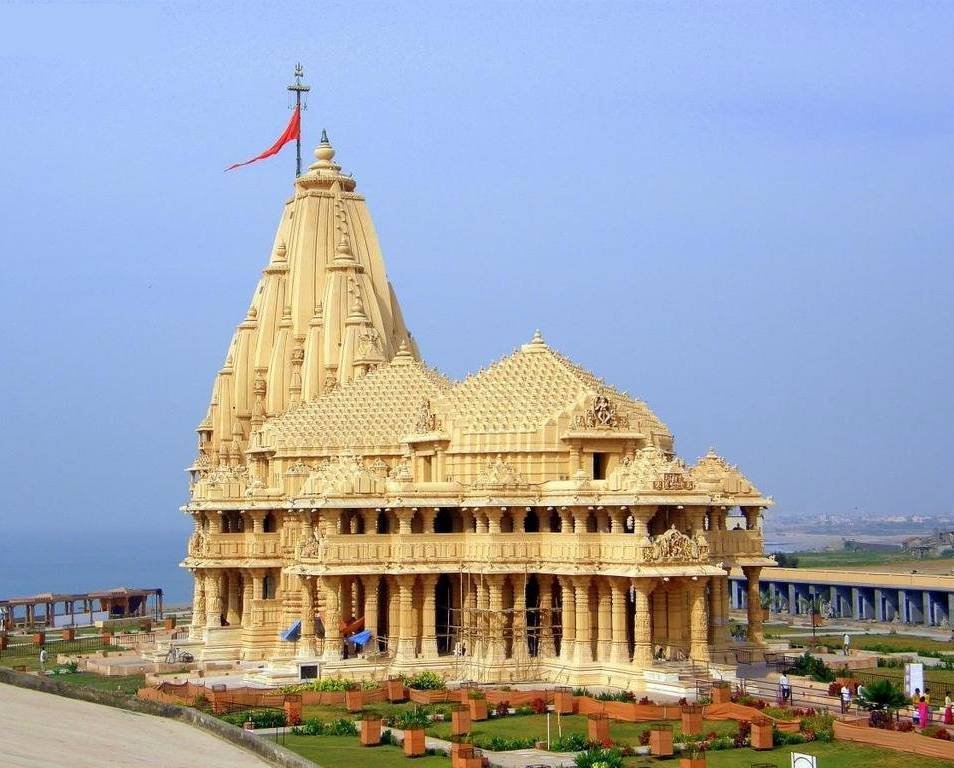
Somnath Temple is one of the twelve Jyotirlingas of Lord Shiva and is located in Veraval, on the western coast of India. It is considered one of the most sacred Shiva temples, with immense historical, spiritual, and cultural significance.
The presiding deity is Shiva in the form of Somnath, meaning “Lord of the Moon,” symbolizing divine luminosity and eternal truth.
Spiritual Significance
- Somnath is believed to be Swayambhu (self-manifested), making it a powerful center for worship.
- Devotees believe that visiting and performing rituals here can free one from sins, grant spiritual liberation (moksha), and bring peace and prosperity.
- The temple has been a beacon of devotion for thousands of years, with references in ancient scriptures like the Skanda Purana.
Historical Importance
- Somnath Temple has faced multiple invasions and has been rebuilt several times, showcasing resilience and devotion of devotees.
- The present structure was reconstructed in 1951 under the guidance of Sardar Vallabhbhai Patel.
- The temple features traditional Chalukya-style architecture with intricately carved pillars, spires, and sanctum.
Major Rituals and Offerings
- Abhishek of Shivling: Using water, milk, honey, and bilva leaves.
- Aarti: Performed several times a day with devotional chants.
- Prasad Distribution: Sweets, fruits, and holy offerings to devotees.
- Special Pujas: Rudrabhishek, Shraddh, and other Vedic rituals for blessings and prosperity.